
Why We Use IR Lamps for Tight Temperature Control
If you’ve ever worked with steam ovens, you know the struggle. You set a temperature, but the actual heat just won’t stay put. It’s a constant fight to stop the temperature from swinging wildly. That’s why we use shortwave infrared (IR) lamps. They basically kill the lag that makes traditional heaters such a pain.
The problem with “heat hangover”
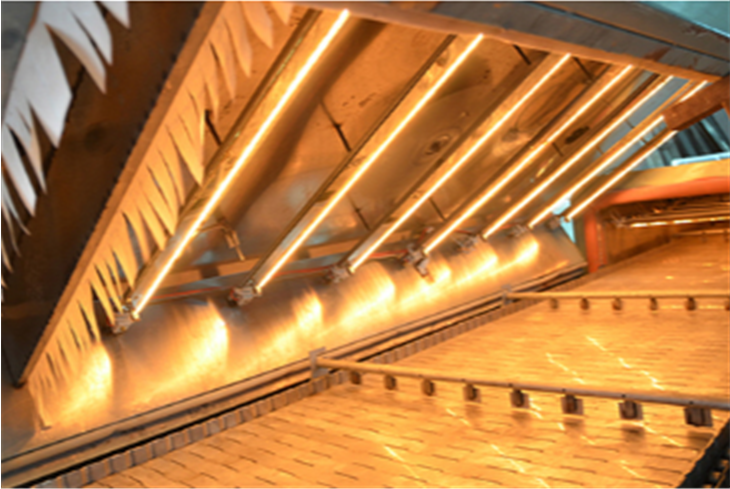
Think about a standard heating coil. It’s a big chunk of metal that stores heat. Even after your controller tells it to shut off, that coil is still glowing and pumping out heat. We call it a “hangover.” It’s the reason your oven overshoots the target temperature—the heater just can’t stop fast enough. Our IR lamps handle things differently. They use a tiny tungsten filament inside a quartz tube. Because there’s almost no mass to it, it hits the right temperature in milliseconds. When the PID controller says “stop,” the heat actually stops.Right now. It’s the only real way to keep your temperature window tight without the system constantly hunting for the right setting.
The nitty-gritty on the hardware
We build these lamps to survive the chaos of an industrial oven. Depending on how much space you have, we tweak the voltage. If you’re tight on room, we go with high-voltage setups. This lets us cram more wattage into a smaller tube, giving you a massive punch of heat in a tiny area. We also use rugged connectors because, let’s be honest, industrial machines vibrate. You don’t want your heating element shaking loose mid-shift. Plus, the quartz glass is top-notch. It lets the energy fly straight to your target instead of wasting it by heating up the lamp housing.
A quick heads-up on the electricals
Here is the catch: immediate heat requires some serious power. If you’re planning a system with a few 2kW tubes, don’t skimp on your wiring or contactors. You have to account for that initial surge of current when they kick on. If the electrical path is too thin, you’re going to end up with burnt-out relays or worn-down contacts. It’s a simple fix, but it’s the difference between a machine that lasts for years and one that keeps you up at night.