
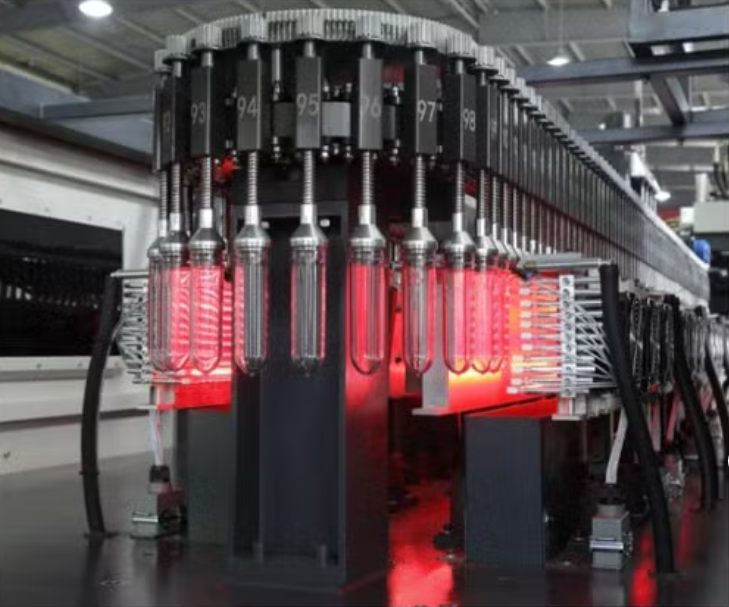
On the blow molding floor, the heating tunnel is where the clock runs fastest. Preforms that don’t soften enough give you brittle bottles and scrap. Preforms that soften too much bring haze, stress cracks, and the headache of mold jams. You live by the numbers every shift—throughput, scrap, energy draw—and the heating system is where those numbers either stay honest or fall apart. What matters under the hood We build quartz halogen infrared lamps for PET preform heating in stretch blow molding. The quartz envelope delivers short-wave infrared efficiently, putting the heat into the preform wall instead of turning the tunnel into a convection oven. The halogen filament holds steady output and snaps back fast, so temperature recovery is immediate between shots. Each lamp is dimensioned to match common blow molder reflector geometries and terminated to standard connections—typically R7s—so it drops right in. We hold tight tolerances on wattage and voltage, and every unit is run-tested to consistent radiant output. Why it behaves the way you need On your blow molder, the whole game is repeatable preform temperature across the entire wall, cycle after cycle. These lamps give you predictable heating curves, so you can hold setpoint longer and stop chasing the process with constant tweaks. That translates into stable bottle weight, consistent wall thickness, and fewer pinholes and flash defects. Because the emitter recovers quickly, the heating section comes back fast after a high-cavitation run, so output stays stable even when you push cycle rates. Energy use drops, too—heat goes where it should, on the preform, not into the machine frame or the air. A few shop-floor details that matter These lamps are direct-fit replacements, but reflector condition makes a real difference. A pitted or oxidized reflector scatters the output and throws your heating profile off, so check the reflectors every time you change a lamp. Clean power matters—big voltage swings shorten filament life, so verify voltage stability at the socket. Handle with care: quartz is tough, but fingerprints and oils create hot spots. Wipe with isopropyl alcohol before installation, seat the lamp properly, and torque to the specified hardware limits.