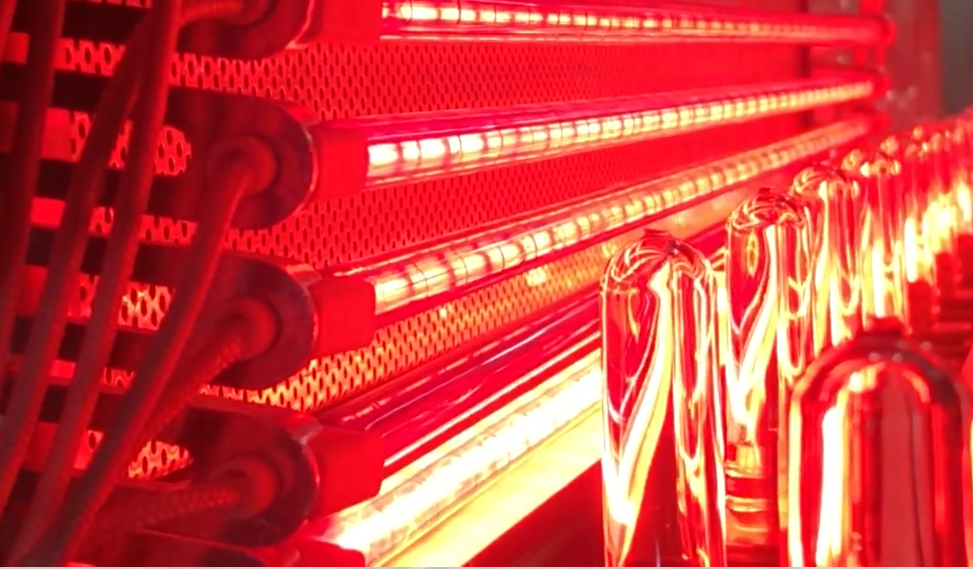
On the floor, the SIPA SFR 16 rotary blow molder has zero patience for uneven preform heating. The moment the heating tunnel starts chasing temperature, you know it immediately—short shots, blown seams, and a line that can’t hold cycle time. A mismatched lamp just makes it worse: too much lag, not enough control, and quartz failures that keep popping up. What matters, technically We built this replacement lamp to match the SFR 16’s heating geometry and control profile. It runs on the machine’s specified voltage, hits the original wattage, and uses the same R7s connector interface. The emitter is a short-wave infrared halogen lamp in a quartz envelope, tuned for quick response and stable output across the preform heating curve. In practice, the heating tunnel hits setpoint fast and holds it without oscillating, so the blow station sees a repeatable material state. Why it works on this machine With this lamp, you get repeatable heating that keeps stretch blow molding stable: consistent neck crystallization, predictable wall distribution, and fewer rejects tied to thermal swing. Energy use drops because the lamp heats on demand and recovers quickly between cycles, and the longer service life means fewer changeouts during scheduled maintenance windows. The payoff is uptime you can count on, shift after shift. Here’s what to watch for Installation is straightforward, but alignment is not optional. The lamp has to seat squarely in the reflector and connector, with clean contacts and proper thermal clearance to avoid localized overheating. Double-check that the lamp matches the exact OEM wattage and voltage for your SFR 16 configuration, and confirm the reflector condition—pitting or oxidation will throw off the heat profile, even with a good lamp.