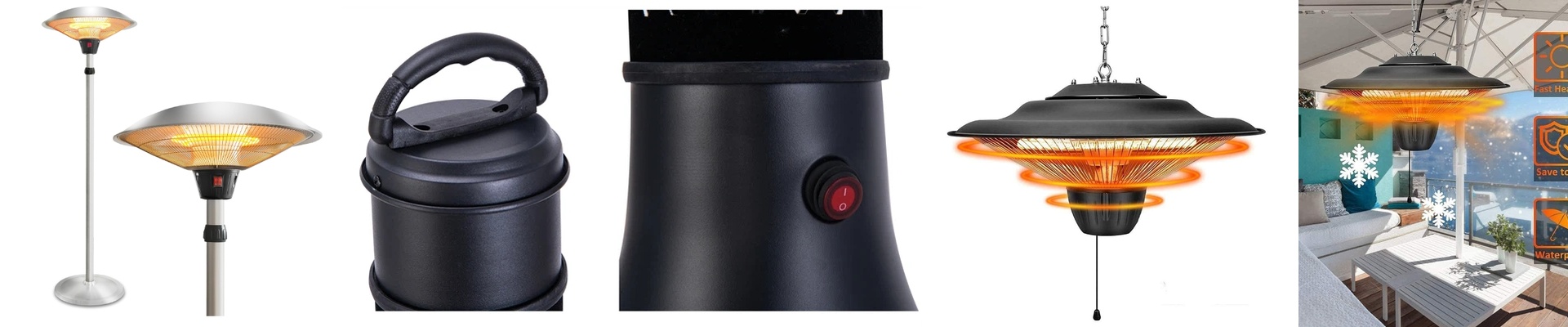
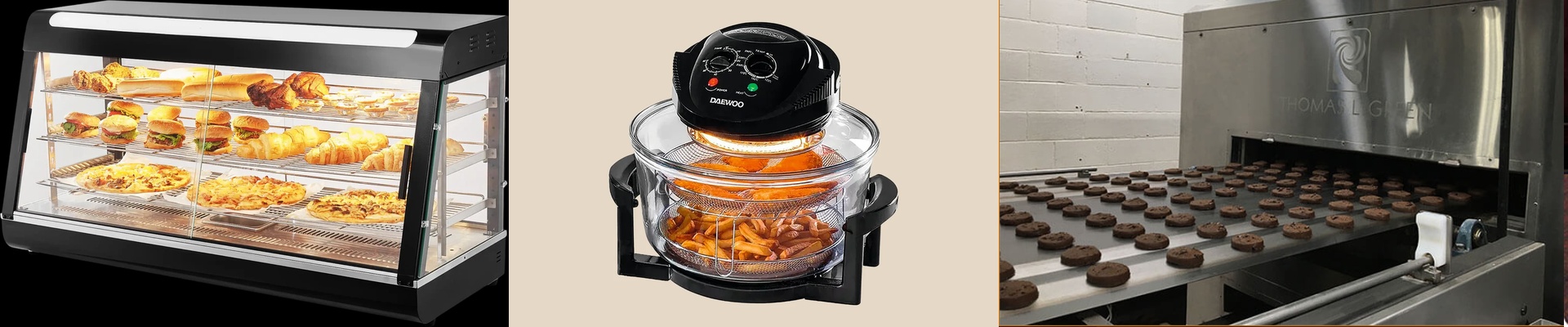
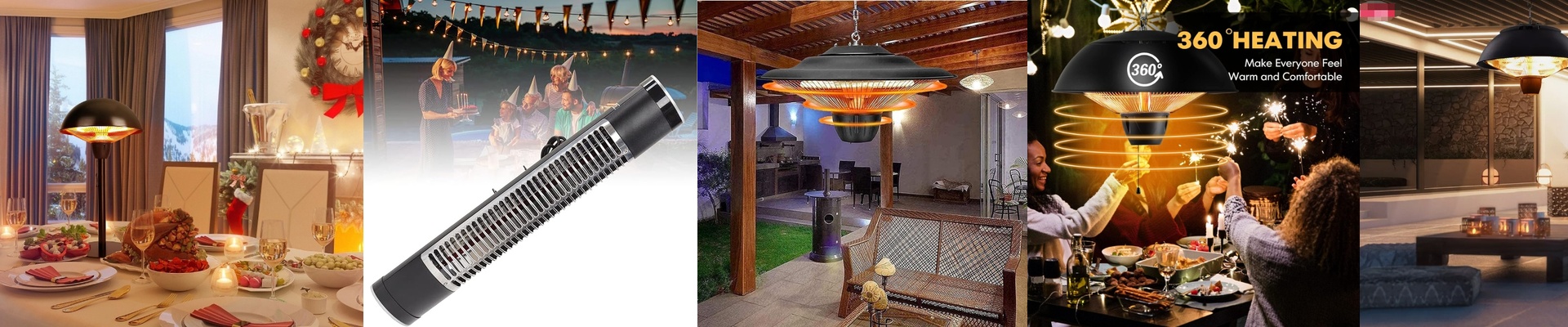

The Secret Sauce: Why Our Infrared Heaters Work So Well
Here’s the thing about portable infrared heaters. It’s not just about cranking out watts. It’s about getting every single one of those watts to where you actually need them. We built our heaters around one core idea: stop wasting energy. The heating element does its job, sure, but the real magic happens in the reflector. It’s the part that takes all that radiant heat and directs it exactly where you want it to go. A cheap reflector? You’re just scattering heat everywhere. You get hot spots and cold spots, and that’s no good. We took a different approach, using precise geometry to focus the beam into a smooth, even pattern. The result? You feel consistent, steady warmth, and you’re not paying to heat the wall instead of the room.
The Beam: It’s All About Control
We’re not just chasing a bright glow. We’re after control. By carefully shaping the reflector’s curve and focal length, we map the heat output into a predictable, tight beam. That means the heat density is uniform across the whole area you’re trying to warm. No more oversizing the heater just to cover the space. And because the beam is focused, you get less spillover. Less wasted energy means more of the heat actually reaches you, which feels great. It also means the heater performs the same way, every single time.
The Trade-offs We Made (So You Don’t Have To)
Getting the optics right is one thing. Making sure it holds up in the real world is another. We use high-reflectance coatings that stand up to the constant heating and cooling cycle, but we’re honest about it—they’ll still degrade over time. So we build the reflector on a tough substrate and mount it securely, so it stays in perfect alignment. High power density is effective, but it puts stress on the components. That’s why we talk about clearances and ventilation. We designed these to be compact and portable, but that means the heat is concentrated. You just need to make sure your space can handle that safely.
Setting It Up: Simple, Straightforward Heat
Out in the field, it’s as easy as it gets. Wire it up, point it, and you’re done. Because the reflector is optimized, a smaller heater can cover a larger area. That means you need fewer units on the job. Installation is a breeze. The geometry does the hard work of distributing the heat, so you don’t need to fiddle with complex aiming or set up multiple heaters just to even things out. Just make sure your mounting surface is solid and your power supply matches the heater’s rating. From there, you get predictable performance and predictable energy use, every time.
What to Look For (And Why It Matters)
When you’re picking out a portable infrared heater, the wattage is only part of the story. **The real difference-maker is the reflector.**It’s the lever that controls both efficiency and how evenly the heat is distributed. So, ask for the beam pattern data. A well-designed reflector gives you more usable heat for every watt you spend, fewer hot spots, and a setup that’s just simpler to deploy. That’s the real-world payoff of putting some serious thought into the optics, all packed into a handheld package.