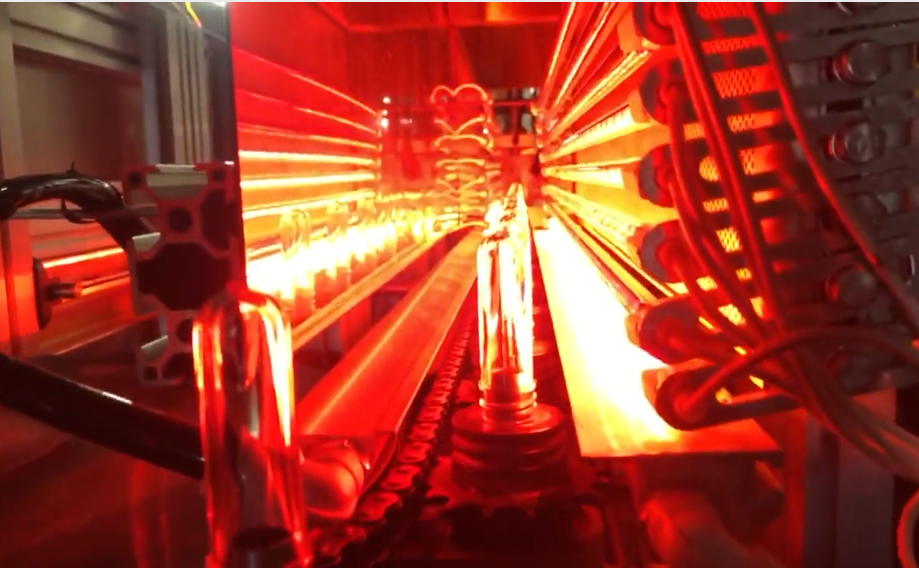
Getting Your Sidel Matrix Temps Back to Normal
Here is the real headache when you swap out heating lamps on a Sidel Matrix line: the temperature curve usually shifts. If the new lamp doesn’t hit the exact same wattage or spectral output as the old one, your preforms start acting up. You end up with uneven wall thickness, and suddenly, you’re dealing with bottle failures. It’s a nightmare. That’s why we build our lamps to be a mirror image of the OEM specs.
It’s All About the Heat Density
We don’t just check the length and voltage and call it a day. That’s amateur hour. We focus on heat density. Your Sidel Matrix needs a very specific amount of wattage per centimeter to get that PET preform to the right temperature without scorching it. We tweak our filaments to hit the exact resistance levels of the original. What does that actually mean for you? It means when you wire them in, the power draw is the same. You won’t have to spend your entire weekend messing with PLC settings or PID loops. It just works.
The Secret is in the Glass
Shortwave infrared is all about penetration. We use high-purity quartz glass so the IR radiation actually hits the preform instead of getting soaked up by the tube itself. But the real trick is the coating. We put a reflective layer on the back of the tube to shove all that heat forward. Everything goes into the plastic. Nothing wastes away into the machine frame.
A Quick Tip on Installation
These are drop-in replacements. They fit your existing footprints and connectors without you having to modify a single thing. But a word of caution. Pushing high wattage through a small tube creates some serious localized heat. If your oven ventilation is clogged or your cooling fans are on their last legs, even the best lamp in the world is going to burn out early. Do yourself a favor: check your airflow before you pop the new sets in. It’ll save you from a premature filament failure and another trip back into the oven.